Places to see in Athens
Acropolis-Parthenon, Herodeion, Theater of Dionysos
Acropolis-Parthenon, Herodeion, Theater of Dionysos
The Acropolis of Athens is one of the most important archaeological sites in the world and is a symbol of ancient Greek heritage. The Parthenon is a temple dedicated to the goddess Athena, the patroness of the city, and was built in the 5th century BC during the Golden Age of Pericles. In addition to the Parthenon, the Acropolis is home to other important monuments, such as the Erechtheion, the temple of Athena Niki and the Propylaia, the monumental entrance to the Acropolis.
Greek Parliament - Monument to the Agnostou Stratioti, Syntagma Square
Greek Parliament - Monument to the Agnostou Stratioti, Syntagma Square
The Hellenic Parliament, the Monument to agnostou stratioti and Syntagma Square are three important points of interest in the heart of Athens, with great historical and political significance. The Parliament Building, originally the Palaces of Othon and Georgios, was transformed a century after its construction into the Building of the Parliament and the Senate. Today it is the Greek Parliament.
Acropolis Museum
Acropolis Museum
The New Acropolis Museum is a modern architectural wonder located at the foot of the Acropolis in Athens. It houses more than 4,000 artifacts from the ancient Acropolis, including the famous Parthenon Sculptures, and offers a unique experience for visitors as they can see the exhibits up close and admire the detail and artistry of the ancient Greeks.
Panathenaic Stadium
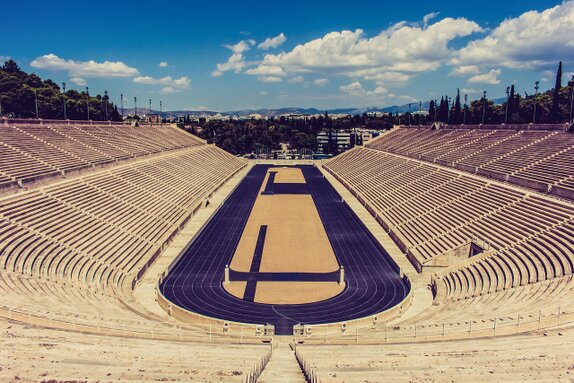
Panathenaic Stadium
The Panathenaic Stadium, also known as Kallimarmaro, is one of the most historic stadiums in the world and is located in Athens. It is entirely made of white Pentelian marble and is one of the most important monuments of the city.
The stadium was originally built in the 4th century BC. to host the Panathenaic Games, an athletic event in honor of the goddess Athena. It was rebuilt in 1896 for the first modern Olympic Games and has since been used for various sporting and cultural events.
National garden
National garden
The National Garden of Athens is a green paradise in the heart of the city, offering an oasis of calm and natural beauty. It was created in 1839-1840 at the initiative of Queen Amalia, the construction beginning in 1839. The Garden was originally called the Royal Garden due to its exclusive use by the royal family, but in 1927 it was renamed the National Garden and opened to the public. Covers an area of approximately 160 acres.
Zappeion
Zappeion
The Zappeion Megaro is one of the most emblematic buildings of Athens and is located in the National Garden, near the Panathenaic Stadium. It was built in the 19th century at the expense of the benefactor Evangelοs Zappa and inaugurated in 1888.
Monastiraki, Plaka, Thisio, Ancient Agora
Monastiraki, Plaka, Thisio, Ancient Agora
Monastiraki, Plaka, Thisio and the Ancient Agora are some of the most picturesque and historical areas of Athens, which attract many visitors every day.
Lycabettus Hill
Lycabettus Hill
Lycabettus Hill is one of the most characteristic hills of Athens and offers a panoramic view of the city. With a height of 277 meters, it is the highest point in the center of Athens and is a popular destination for walks and recreation.
At the top of the hill is the church of Agios Georgios, a picturesque white church dating from the 19th century.
Dionysiou Areopagitou Street
Dionysiou Areopagitou Street
Dionysiou Areopagitou Street is one of the most beautiful and historic streets of Athens under the Acropolis. It starts from Amalia Avenue, near Hadrian's Arch, and ends at Apostolou Pavlou Street, in Thisio. It is a pedestrian street that crosses the heart of the ancient city, offering a unique experience to walkers.
Stavros Niarchos Foundation Cultural Center (SNFCC)
Stavros Niarchos Foundation Cultural Center (SNFCC)
The Stavros Niarchos Foundation Cultural Center (SNFCC) is a modern venue for cultural events, which includes the National Library of Greece and the National Opera, as well as an urban park as well as other smaller facilities.
Academy of Athens, National Library
Academy of Athens, National Library
The neoclassical mansion in the center of Athens that houses the Academy of Athens was built several decades before the Academy itself was founded. The history of the building begins with a large donation by Simonos Sina in 1856 for the purpose of erecting a building that would house the Academy.
National Gallery
National Gallery
The gallery is housed in a modern building in the Evangelismos area of Athens, which was recently renovated and expanded to meet the growing needs of the collection and visitors. The new National Gallery opened its doors in 2021, offering a renewed museum experience.
Aristotle's Lyceum and Byzantine & Christian Museum
Aristotle's Lyceum and Byzantine & Christian Museum
Do not forget to visit Aristotle's Lyceum, one of the most important philosophical centers of antiquity. There, the great philosopher taught and developed his ideas, leaving an indelible mark on our thought. In the winter residence of the Duchess of Plakentia (Villa Ilissia) is housed the Byzantine and Christian Museum, which is one of the national museums of Greece, focusing on religious works of art from the Early Christian, Byzantine, Medieval, post-Byzantine, and later periods. It exhibits, acquires, preserves, and researches more than 25,000 objects dating from the 3rd to the 20th century AD, covering the Greek world and regions influenced by Hellenism. Its extensive collections make it a treasure of Byzantine and post-Byzantine art and culture. This mansion of the Duchess is one of the most important architectural works from the era of King Othon and represents one of the finest works of art by the architect Kleanthis. The Duchess of Plakentia lived in the mansion until her death in May 1854.
National Archaeological Museum
National Archaeological Museum
The National Archaeological Museum is the largest museum in Greece and one of the most important in the world. It was founded in 1829 and is housed in a neoclassical building constructed between 1866 and 1889.
The Palace of the Old Parliament
The Palace of the Old Parliament
The Palace of the Old Parliament is linked to Greek history, as it is the first permanent roof of the Parliament.
The neoclassical palace was founded in 1858 by Queen Amalia, based on plans by the French architect François Boulanger. After the eviction of King Otto in 1862, the Senate was abolished and the building was modified by Panagiotis Kalkos. It was completed in 1875 and on August 11, 1875 the sessions of the Parliament began with Harilaos Trikoupis as Prime Minister. For 60 years it housed the political life of the country, until 1935 when the Parliament was relocated to the Old Palace.
The building of the Old Parliament was granted to the Historical and Ethnological Society of Greece for the National Historical Museum.
The Temple of Poseidon at Sounio
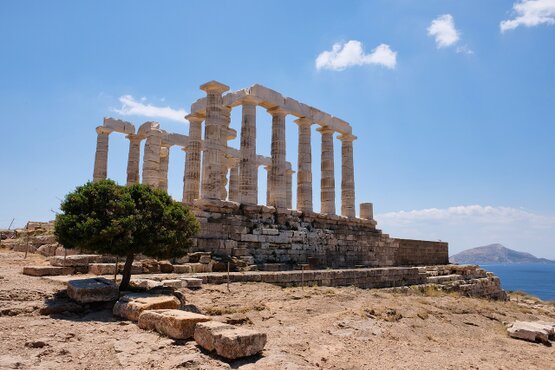
The Temple of Poseidon at Sounio
The Temple of Poseidon at Sounion is one of the most iconic archaeological sites in Greece. Built in the 5th century BC, the temple was dedicated to the god of the sea, Poseidon, and was a center of worship and prayer for ancient Greek sailors.
It is located at the southernmost tip of Attica, in a strategic position that allowed control of the sea routes. The temple's location offers a magnificent view of the Aegean Sea and is known for its spectacular sunsets.
The aesthetic forest of Kaisariani with the Medieval Monastery of Kaisariani.
The aesthetic forest of Kaisariani with the Medieval Monastery of Kaisariani.
The Kaisariani Monastery is a medieval church in Attica. It is located on Mount Ymittos, in the plain almost at the midpoint of the length of the western slope near Athens. It dates back to around 1100. The monastery is built in a place with a rich history, which was likely an ancient worship site dedicated to Aphrodite. It is surrounded by the aesthetic Kaisariani forest, also known as the "salon of Ymittos," which offers a calm and clean natural environment with tall trees, winding paths, and beautiful landscapes, just a few minutes from the center of Athens. The area is an ideal place for walking, exercising, and mental restoration in nature, combining historical significance with natural beauty.
Athens riviera
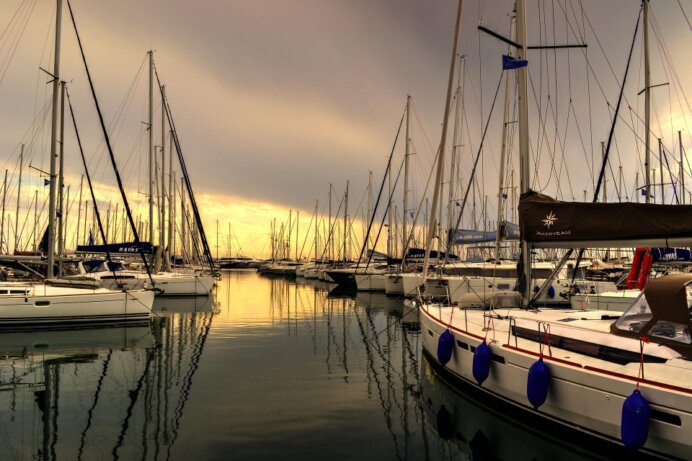
Αθηναïκή ριβιέρα. Athens riviera